

Support work is demanding, and burnout is common. Over half of service agents report burnout, according to Salesforce’s 2025 data.
Burnout is not just a personal issue. It drives mistakes, slow replies, and high turnover.
Much of it traces back to workload. This guide explains how better workload management prevents burnout and keeps good agents.
Burnout is more than a bad day. It is chronic stress that builds over time.
Signs include exhaustion, cynicism, and dropping quality. Agents may disengage, call in sick more, or start job hunting.
Caught early, burnout is manageable. Left alone, it leads to resignations and lost knowledge.
Many burnout drivers come back to workload and how work is managed.
When volume outstrips capacity, agents never catch up. In customer service, 77% say workload and issue complexity have risen year over year.
When a few agents carry most of the load, they burn out first. Uneven queues quietly punish your best people.
Back-to-back tickets with no breaks wear people down. Utilization pushed too high removes any slack.
Burnout is expensive, even if the cost is hidden at first.
Support turnover already runs high across the industry. Replacing a trained agent costs thousands and takes months.
Burned-out agents also deliver worse service before they leave. Customers feel the strain through slow, flat interactions.
You cannot remove all pressure from support. But you can manage workload so it stays sustainable.
Spread tickets fairly by skill and current load. No agent should be buried while others idle. AI ticket routing guide

Match staffing to demand, including peaks. Chronic understaffing is a direct path to burnout.
Build breaks and focus time into schedules. Sustainable pace beats short bursts followed by collapse.
Automate repetitive tasks like tagging and routing. Removing busywork lets agents focus on real problems.
These steps combine workload management with everyday care.
Small, consistent changes matter more than one-off perks. A fair workload does more than a pizza party.
Tools and routing help, but culture sustains the results. A few habits protect agents over the long run.
Make it safe for agents to say they are stretched. Early signals let you rebalance before someone breaks down.
Hard tickets take longer and drain more energy. Recognize the effort, not only the ticket count, so agents feel seen.
Learning and variety reduce the grind. Time for training and new challenges keeps the role fresh.
Culture and workload management work together. Fair systems plus genuine care keep a team healthy.
Do not wait for a resignation to respond. Act on the first steady signs, not the last.
If utilization stays high for weeks, or one agent’s backlog keeps growing, step in. Rebalance the load and check in directly.
Quick action shows agents the system works for them. That trust is what keeps good people from leaving.
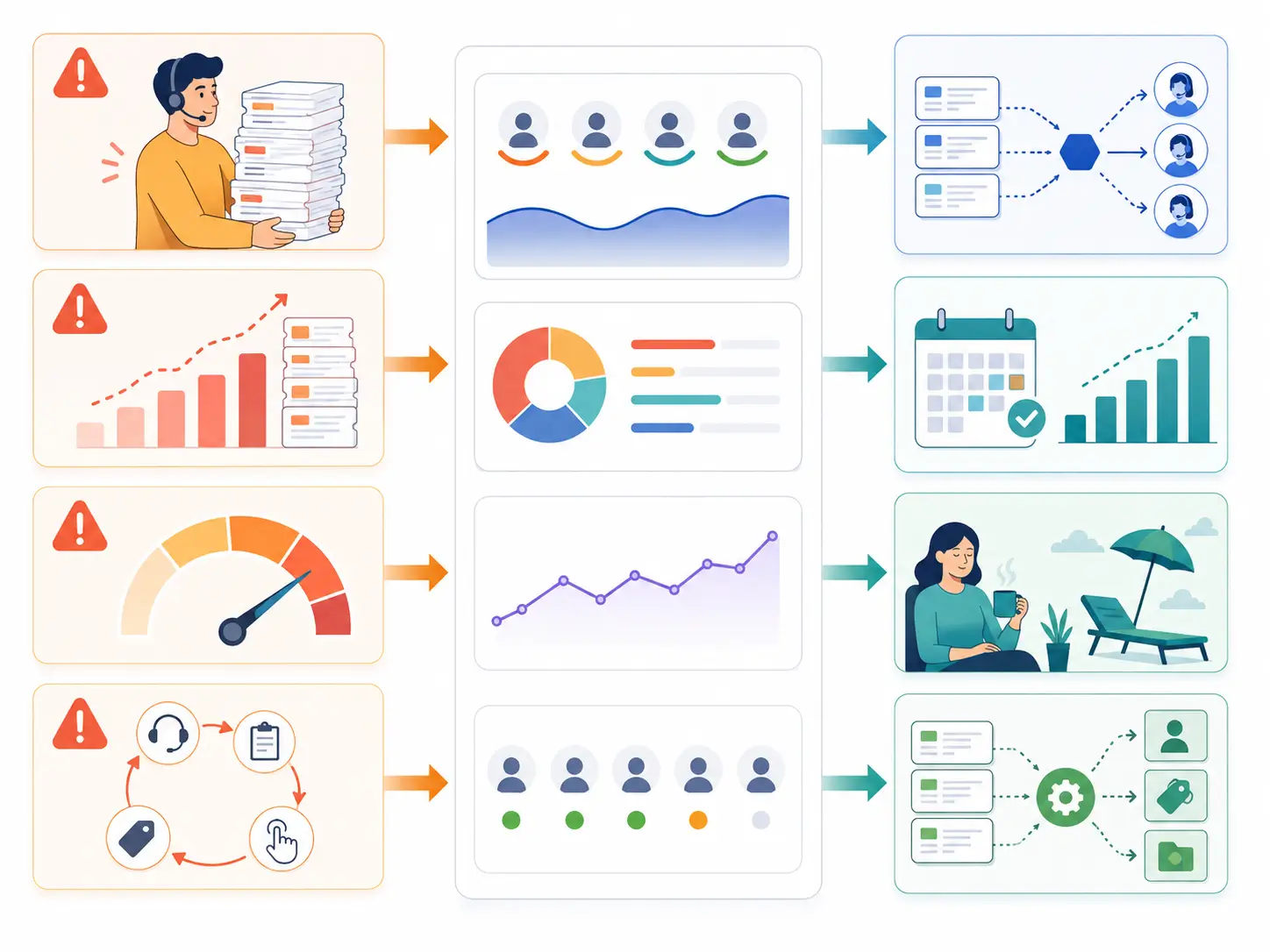
Use this quick map to connect a warning sign to its likely cause and fix.
| Warning sign | Likely workload cause | Fix |
|---|---|---|
| A few agents always overloaded | Unfair distribution | Load-aware routing |
| Backlog never clears | Undercapacity | Capacity planning |
| No breaks between tickets | Utilization too high | Protect recovery time |
| Time lost to busywork | Manual, repetitive tasks | Automate tagging and routing |
A few agents always overloaded
Backlog never clears
No breaks between tickets
Time lost to busywork
Watch these to catch problems early.
Read them together. High utilization plus falling satisfaction is an early warning. analytics and reporting guide
Hengine keeps workload balanced, which directly supports agent wellbeing.
AI routing distributes tickets by skill and load, so work stays fair.
Real-time dashboards and analytics flag overload early, before it becomes burnout. SLA tracking guide
Chronic overload, unfair workload, and no recovery time are leading causes. Poor tools and unclear priorities add to it.
Balanced distribution and proper staffing keep the pace sustainable. Automation removes busywork that drains agents.
Watch sustained high utilization, concentrated backlog, falling satisfaction, and rising absences. Together they signal trouble early.
Not entirely, but workload is a major driver. Fixing distribution and capacity removes much of the pressure.
Balance the load, plan capacity, protect recovery time, and watch the warning signs. Sustainable workload keeps agents and service healthy.
To keep workload fair and spot overload early, explore how Hengine supports your team.