

Every support team faces the same question: do we have enough people for the work coming in? Guessing leads to burnout or wasted budget.
Capacity planning replaces guesswork with data. It matches your staffing to real, forecasted demand.
This guide explains what capacity planning is, how to forecast demand, and how to plan coverage for busy periods.
Capacity planning is the process of matching support staffing to expected ticket volume. It looks ahead, not just at today.
The goal is steady service without overloading agents or overspending on idle time. It balances demand and capacity.
Good planning keeps queues moving through peaks and quiet periods alike.
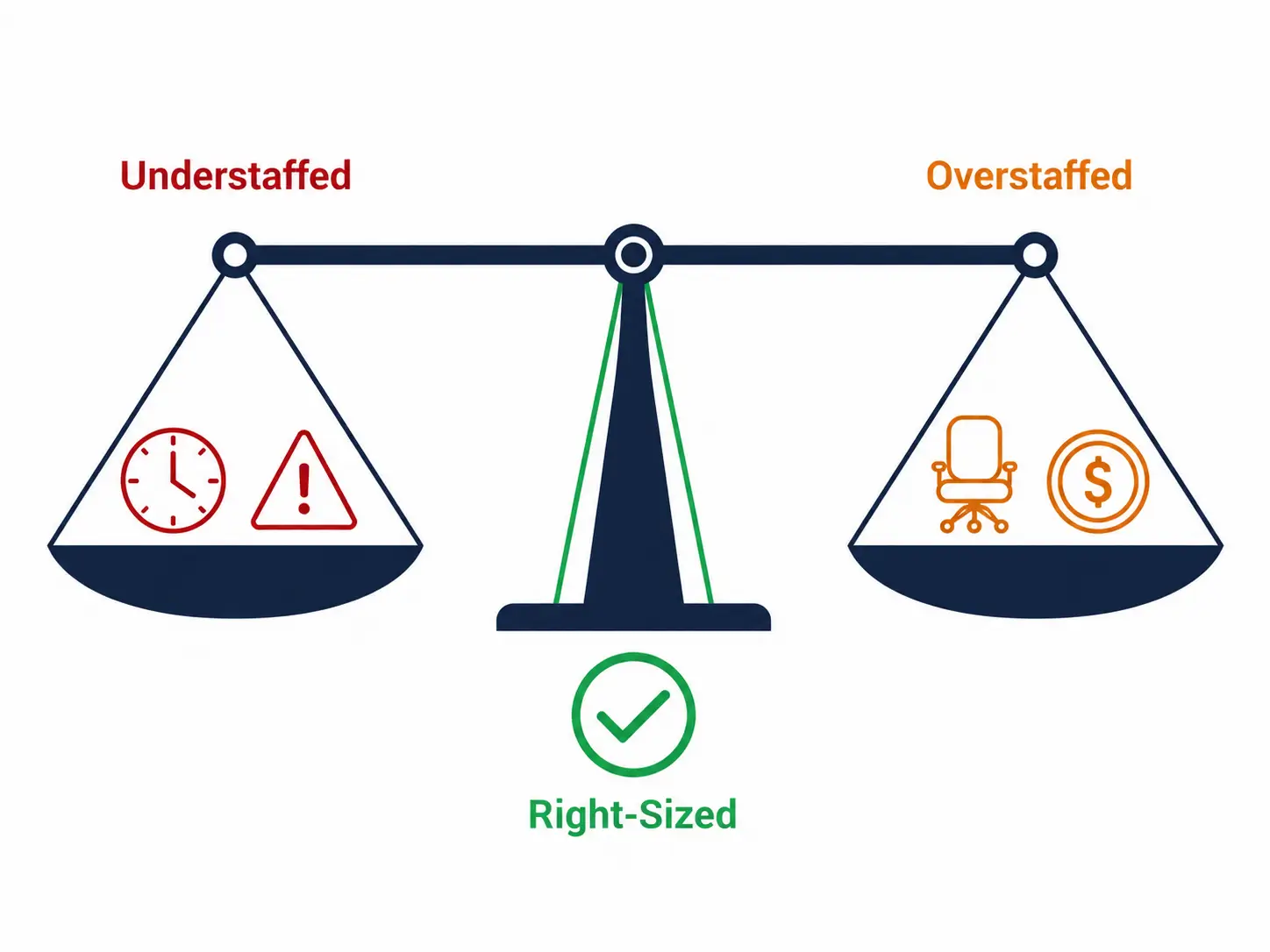
Without a plan, teams swing between two bad states. Both hurt.
Too few agents means long waits and missed SLAs. Agents burn out, and quality drops. SLA management guide
Too many agents for the work wastes budget. Idle time is expensive and hard to justify.
Capacity planning finds the middle: enough coverage, without waste.
Forecasting uses your history to predict future volume. It does not need to be complex to be useful.
Even a simple trend line beats guessing. Refine the forecast as you gather more data. analytics and reporting guide
Once you know demand, estimate how much your team can handle.
Start with how many tickets one agent resolves well per day. Use real averages, not best-case numbers.
Account for time lost to meetings, breaks, and admin. Agents are not on tickets every minute.
| Input | Example | Notes |
|---|---|---|
| Forecasted tickets/day | 400 | From your demand forecast |
| Tickets per agent/day | 40 | Realistic, sustainable rate |
| Agents needed | 10 | Forecast divided by per-agent rate |
| Buffer for peaks/absence | +15% | Cover spikes and time off |
Forecasted tickets/day
Tickets per agent/day
Agents needed
Buffer for peaks/absence
Add a buffer for absences and unexpected spikes. A plan with no slack breaks on the first busy day.
Demand is rarely flat. Most teams have daily, weekly, and seasonal peaks.
Schedule more coverage during known busy windows. Shift start times to match when tickets actually arrive.
For seasonal spikes, plan early. Temporary staff or cross-trained colleagues can cover short surges.
These metrics tell you whether your capacity is right.
Watch utilization closely. Sustained highs mean you are running short on capacity.

Analytics turn raw tickets into forecasts. Dashboards show trends and peaks without manual spreadsheets.
Hengine’s reporting reveals volume patterns and utilization, so you can plan staffing with confidence.
AI routing then makes the most of the capacity you have, balancing load in real time. AI ticket routing guide
Capacity planning is a trade-off between cost and speed. More agents mean faster replies but higher spend.
Decide the service level you are willing to fund. A clear target, like a first response within an hour, guides staffing.
Then plan the minimum capacity that meets that target through your peaks. This keeps spending tied to a defined goal, not to fear of backlog.
Better routing can lift service without new hires. Always check whether distribution can recover capacity before you add headcount.
Planning gets harder as volume and channels grow. What worked for five agents rarely fits twenty.
Revisit your per-agent rate as work changes. New products and complex issues can lower how many tickets each agent handles.
Cross-training helps you flex capacity between queues. When one area spikes, trained colleagues can step in quickly.
Treat the plan as living, not fixed. Small, regular updates keep staffing aligned with real demand. scaling support guide
It is matching your staffing to forecasted ticket demand. The aim is steady service without overload or waste.
Use six to twelve months of history, broken down by day and hour. Mark known spikes and project forward.
It varies by complexity and channel. Use your own realistic average, not a best-case number.
Review it each quarter, or sooner after big changes. Demand shifts as your product and customers grow.
Start with a demand forecast, then calculate agents needed and add a buffer. Review it regularly.
To forecast demand and track utilization in one place, explore how Hengine supports capacity planning.