

Agent utilization sounds simple, but it is easy to get wrong. Push it too high and agents burn out; too low and budget is wasted.
The goal is a healthy, sustainable level. That takes clear measurement and the right context.
This guide explains what agent utilization is, how to measure it, and how to improve it without overworking your team.
Agent utilization is the share of an agent’s time spent on active work. Active work means handling tickets, chats, or calls.
It is usually shown as a percentage of paid or scheduled time. The rest covers breaks, meetings, training, and admin.
Utilization measures how busy agents are, not how well they perform. Both matter, but they are different things.
The basic formula is straightforward.
Divide time spent on active work by total available time, then multiply by 100. That gives the utilization percentage.
| Input | Example | Notes |
|---|---|---|
| Active work time | 6 hours | Time on tickets, chats, calls |
| Available time | 8 hours | Scheduled or paid time |
| Utilization | 75% | Active divided by available |
Active work time
Available time
Utilization
Measure across a week or month, not a single day. One busy day is not a trend.
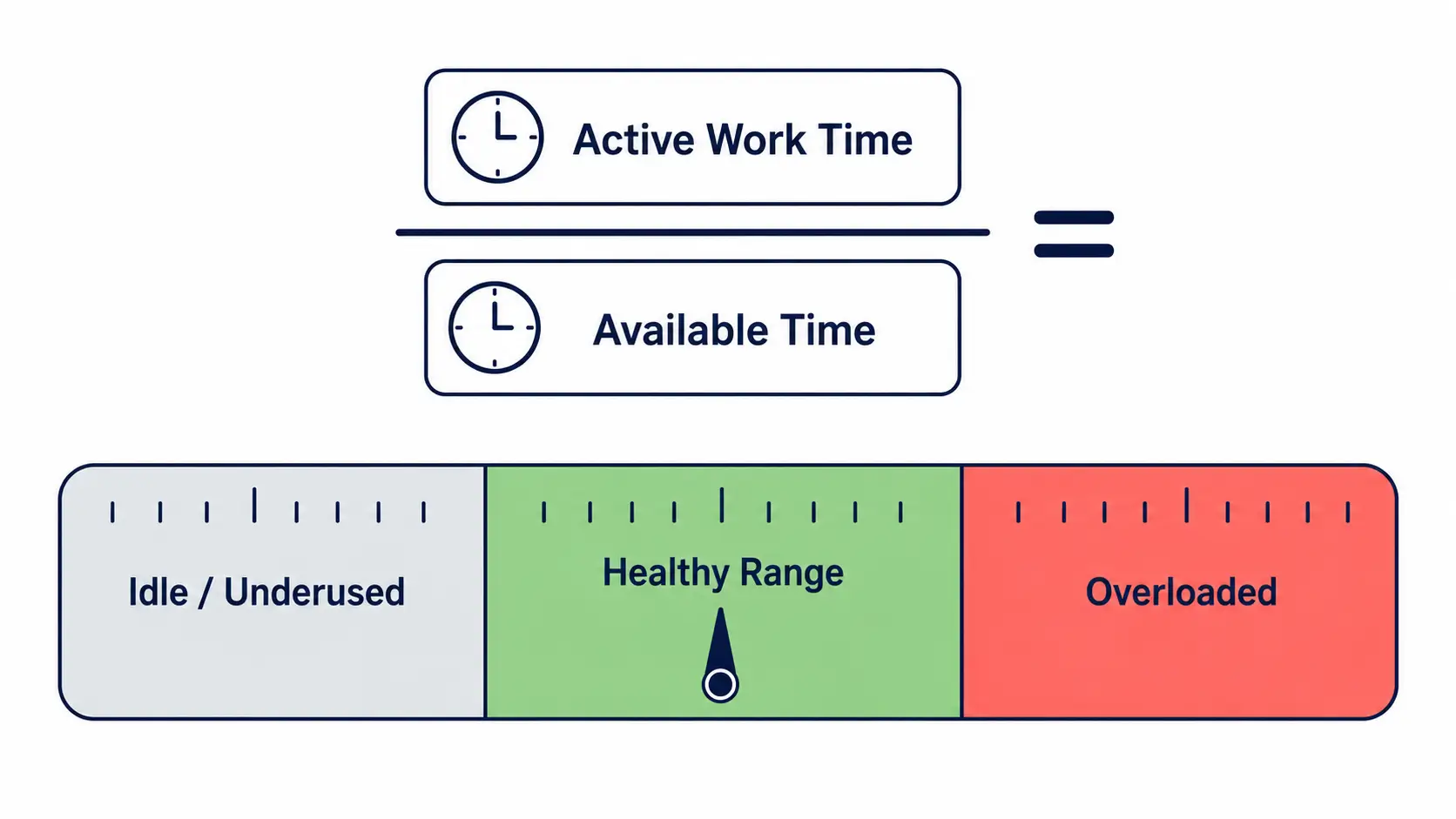
There is no single perfect number. It depends on channel, complexity, and how you count non-ticket work.
Very high utilization leaves no room for breaks, learning, or surprises. That pace is not sustainable.
A healthy range leaves slack for quality, training, and recovery. Aim for busy but not stretched.
Utilization is useful, but easy to misread. Use it with care.
An agent at full capacity looks productive. But they have no room to handle a spike or improve their skills.
A busy agent can still give poor answers. Pair utilization with quality and satisfaction metrics.
If you count admin time differently across teams, numbers do not compare. Use one clear definition.
Improving utilization is not about squeezing agents. It is about removing waste and balancing load.
Better routing often lifts utilization on its own. It fills idle time without extra pressure.
Never judge utilization alone. These metrics give the full picture.
Read them together. High utilization with falling satisfaction is a warning, not a win. analytics and reporting guide
Manual work drags utilization in the wrong direction. Automation frees time for real support.
AI routing keeps every agent supplied with the right tickets, cutting idle time. AI ticket routing guide
Hengine automates tagging, routing, and reporting, so agents spend more time helping customers.

Utilization and productivity are often confused. They measure different things.
Utilization is how much time is spent on active work. Productivity is how much useful output that time creates.
An agent can be fully utilized yet not productive, if the work is slow or low value. The reverse is also true.
Use utilization to spot idle time or overload. Use productivity and quality metrics to judge results. Together they give a fair view.
Numbers can feel like surveillance if handled poorly. Framing matters.
Present utilization as a tool to balance work, not to rank people. Explain that the goal is a fair, sustainable load.
Invite agents to flag when their queue feels too heavy. Their input often reveals routing gaps the data alone misses.
There is no universal number. Aim for busy but sustainable, with room for breaks, training, and spikes.
Divide active work time by total available time, then multiply by 100. Measure over a week or month.
No. Very high utilization removes slack for quality and recovery, which raises the risk of burnout.
Balance workload, automate repetitive tasks, and deflect simple questions with self-service. This removes waste, not adds pressure.
Measure utilization consistently, read it with quality metrics, and improve it by removing waste.
To track utilization and balance load automatically, explore how Hengine supports your team.