
Most startups start with a shared inbox. It works until the day support requests outgrow it, and messages begin slipping through the cracks.
The right helpdesk fixes that without slowing a small team down. It adds structure, tracking, and automation while staying affordable and easy to run.
This guide explains what startups should look for, compares notable options, and shows when to upgrade as you grow. Each section links to a deeper article on the topic.
A startup’s needs are specific. You want power without complexity, and pricing that does not punish growth. A short checklist keeps the decision focused.
Early on, the budget is tight. A free tier or a low starting price lets you adopt a real helpdesk before revenue justifies a big spend.
You do not have an admin team to configure software for weeks. The tool should be usable within days, with a minimal learning curve.
A small team cannot sort tickets by hand for long. Look for no-code routing, assignment, and workflows that business users can configure themselves.
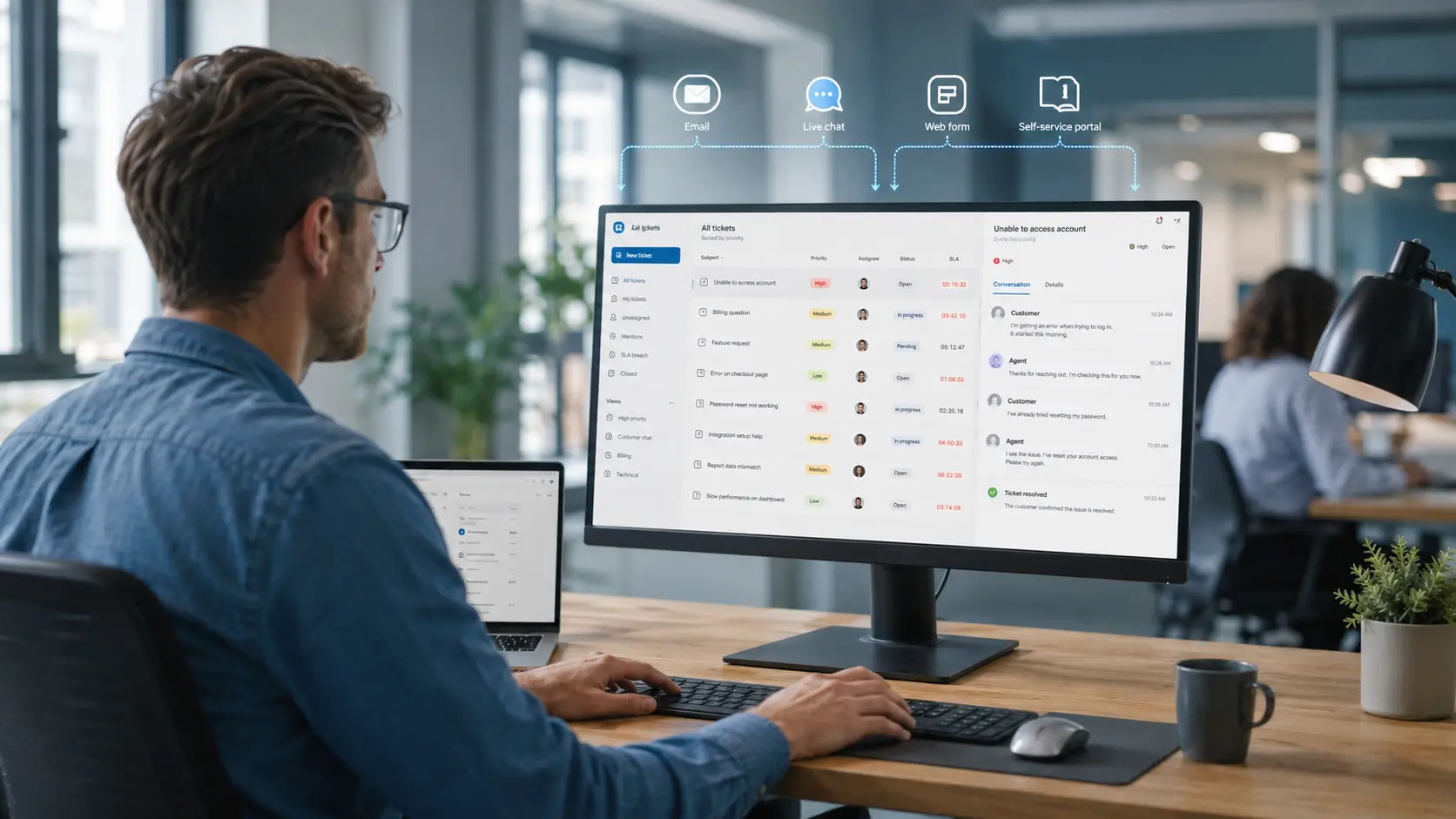
Customers reach out by email, chat, and web forms. The helpdesk should pull every channel into one queue, so nothing is missed.
Even small teams benefit from deadlines and visibility. Built-in SLAs and clear reports help you keep promises and spot problems early.
The tool you pick should grow with you. Migrating helpdesks later is painful, so choose one that supports both small teams and larger operations.
Affordable Helpdesk Software for Small Teams.
This guide weighs tools on the criteria above: entry pricing, ease of setup, automation, channels, SLAs, and scalability. It also considers whether one tool can serve both customer and internal requests.
No single help desk wins for every startup. The best choice depends on your team size, budget, and whether you support customers, employees, or both.
Pricing models and plan names change often. Treat the descriptions below as positioning guidance and confirm current pricing and features on each vendor’s site before deciding.
The options below are widely used by small and growing teams. Each suits a slightly different starting point.
Hengine SDP is a service management platform built around structured workflows, SLAs, and intelligent analytics. It suits startups that want an enterprise-style structure without enterprise complexity.
Its strengths are SLA-driven operations and automation. Real-time SLA tracking, auto-escalation, no-code workflow automation, and AI-driven analytics come together in one platform.
It also serves internal and external requests from the same system, covering IT, HR, and facilities alongside customer support. Pricing spans a free Freemium tier, plus Advance and Enterprise plans as you grow.
It is a strong fit for teams that value SLAs, reporting, and a clear upgrade path. Teams wanting only a lightweight email-style inbox may prefer a simpler tool.
Zendesk is an established, feature-rich platform used widely across mid-market and enterprise support. Its depth is the main draw.
For startups, that depth is both a strength and a trade-off. You get extensive features and integrations, but setup and cost can grow quickly as you add capabilities.
It suits teams that expect to scale fast and want a platform that will not be outgrown. Very small teams may find it more than they need at first.
Freshdesk is a popular all-rounder known for a friendly interface and a usable free tier. It balances features and approachability well.
It covers ticketing, automation, and multichannel support without a steep learning curve. That makes it a common first help desk for small teams.
It is a solid general-purpose choice. Teams with heavy, SLA-critical operations may want to confirm the depth of those features in lower tiers.
Help Scout focuses on simple, email-style customer support with a clean, human feel. It hides ticket jargon from customers.
That simplicity is its appeal. Small teams that mainly handle email and want a low learning curve often like it.
It is less suited to complex internal service desk needs. Teams that need deep ITSM-style workflows may find it limited.
Zoho Desk offers strong value, especially for teams already using the wider Zoho ecosystem. Integration across Zoho apps is a key benefit.
It provides ticketing, automation, and multichannel support at competitive pricing. For budget-conscious startups, that value is attractive.
It fits teams that want capable features without premium pricing. Those outside the Zoho ecosystem should weigh how much they will use the integrations.
Intercom is known for conversational, messaging-first support and AI-driven chat. It leans toward real-time, in-product engagement.
For startups focused on live chat and onboarding conversations, it is a natural fit. Its strengths are speed and a modern messaging experience.
It is less of a traditional ticketing system. Teams that need structured SLAs and queue management may need to pair it with other tools.
The table summarizes where each tool fits best. Use it as a starting point, then verify current details with each vendor.
| Tool | Best for | Notable strength | Watch-out |
|---|---|---|---|
| Hengine | SLA-driven teams, internal + external | Real-time SLAs, automation, analytics | Overkill for a pure email inbox |
| Zendesk | Fast-scaling support teams | Depth and integrations | Cost and setup grow quickly |
| Freshdesk | General-purpose first helpdesk | Friendly, usable free tier | Confirm SLA depth in low tiers |
| Help Scout | Simple email support | Clean, human experience | Limited for complex workflows |
| Zoho Desk | Value and Zoho users | Strong value, ecosystem fit | Best within Zoho stack |
| Intercom | Chat-first engagement | Modern messaging and AI | Less structured ticketing |
Most startups begin on a free tier, and that is the right call. The question is when a paid plan starts to pay for itself.
A free plan is enough while volume is low and your needs are basic. You get ticketing, a shared queue, and simple tracking without spending anything.
Paid plans earn their cost when automation saves real time. Once you need advanced routing, SLAs, deeper reporting, or more agents, the upgrade usually returns more than it costs.
Watch for hidden costs as you compare. Per-agent pricing can climb quickly with team growth, so check how the price scales, not just the entry rate.
“Affordable Helpdesk Software for Small Teams.”
A few avoidable errors lead to painful migrations later. Keep them in mind as you decide.
The common thread is to choose the team you are becoming, not only the team you are today.

The helpdesk that fits a five-person startup may strain at fifty. A few signals tell you it is time to move up a tier or add capabilities.
Watch your ticket volume and response times. When SLAs slip, and agents drown in repetitive work, you need more automation, not just more people.
Watch your team structure too. As you add tiers of support and more departments, you need routing, permissions, and reporting that a basic inbox cannot provide.
The smoothest path is to choose a tool that scales with you from the start. That way, upgrading means unlocking features, not migrating systems.
Scaling Support from Startup to Enterprise.

Many startups overlook a useful efficiency: the same helpdesk can serve customers and employees. IT, HR, and facilities requests run on the same engine as customer tickets.
Consolidating both into one platform reduces tool sprawl and cost. It also gives leadership a single view of all support work across the company.
If your team handles both kinds of requests, weigh this in your decision. A platform that does both can save a future migration.
One Helpdesk for IT, HR & Facilities Requests” and “Internal vs Customer Ticketing: Which Do You Need?
Hengine SDP is designed to start small and scale to an enterprise. The free Freemium plan lets a small team adopt real ticketing and SLAs without upfront cost.
As you grow, the Advance and Enterprise plans add depth rather than forcing a migration. Workflow Automation, real-time SLA tracking, role-based access, and Vital Analytics are built into one platform.
Because it serves internal and external requests together, it can be the single support system for the whole company. That keeps tooling simple as the team expands.
Next step: Explore Hengine’s simple pricing and start with the free Freemium plan. Book a demo to see how it scales from your first hire to your hundredth.
A typical path shows how needs change with growth. Consider a startup over its first two years.
At launch, two founders answered every email themselves. A shared inbox was enough, and a helpdesk would have been overkill.
By month six, support volume tripled and messages started slipping. They adopted a free helpdesk tier, which added ticket ownership, basic routing, and a simple knowledge base.
A year in, the team hit twelve people across support, IT, and HR. Manual routing no longer scaled, so they upgraded to no-code automation and SLAs.
By year two, they consolidated customer and internal requests onto one platform. Leadership finally saw total support volume, and SLAs kept response times steady as the company grew.
The journey points to one lesson. Choosing a tool that scales from a free tier to full automation meant upgrading features, not migrating systems.
It depends on your needs. Teams that want SLAs and automation with a free entry tier should shortlist Hengine, while email-first teams may prefer Help Scout or Freshdesk. Compare against the checklist above.
Email works at the very start. Once requests outgrow a single inbox and start slipping, a helpdesk adds ownership, tracking, and automation that email cannot. Most teams switch sooner than they expect.
Pricing varies widely and changes often. Many tools offer a free tier or a low per-agent starting price, with costs rising as you add agents and features. Always confirm current pricing on the vendor’s site.
Yes. The same engine can serve customer support and internal IT, HR, and facilities requests. Choosing one platform for both reduces cost and avoids running separate systems.