
If you have read anything about IT service management, you have seen the word ITIL. It is the most widely used framework for delivering IT services well. This guide explains what it is in plain English.
You will learn what ITIL is, how it relates to ITSM, and the key ideas behind it. It is written for beginners, with no jargon assumed.
ITIL is a framework of best practices for IT service management. It gives organizations a proven, common way to design, deliver, and improve IT services.
Think of it as a playbook. Rather than inventing your own processes, you borrow practices that many organizations have refined over decades.
ITIL is not a law or a product. It is guidance you adapt to your own needs, taking what fits and leaving the rest.
“The Complete Guide to IT Service Management (ITSM).”
These two terms travel together, which causes confusion. The difference is simple.
ITSM is the practice of managing IT services. It is what you actually do day to day.
ITIL is a framework that guides how to do ITSM well. It is one popular set of best practices, not the only one.
In short, ITSM is the goal, and ITIL is a well-known map for reaching it. You can do ITSM without ITIL, but ITIL gives you a head start.
ITIL has been around for decades and has evolved with the industry. Knowing the versions helps you read the terminology.
It began in the 1980s as a set of UK government guidance. Over time it became the global standard for IT service management.
The latest version is ITIL Version 5 (ITIL v5), launched in February 2026. It runs alongside ITIL 4, keeps all 34 practices, and builds on ITIL 4’s ideas, so existing ITIL 4 knowledge still applies.
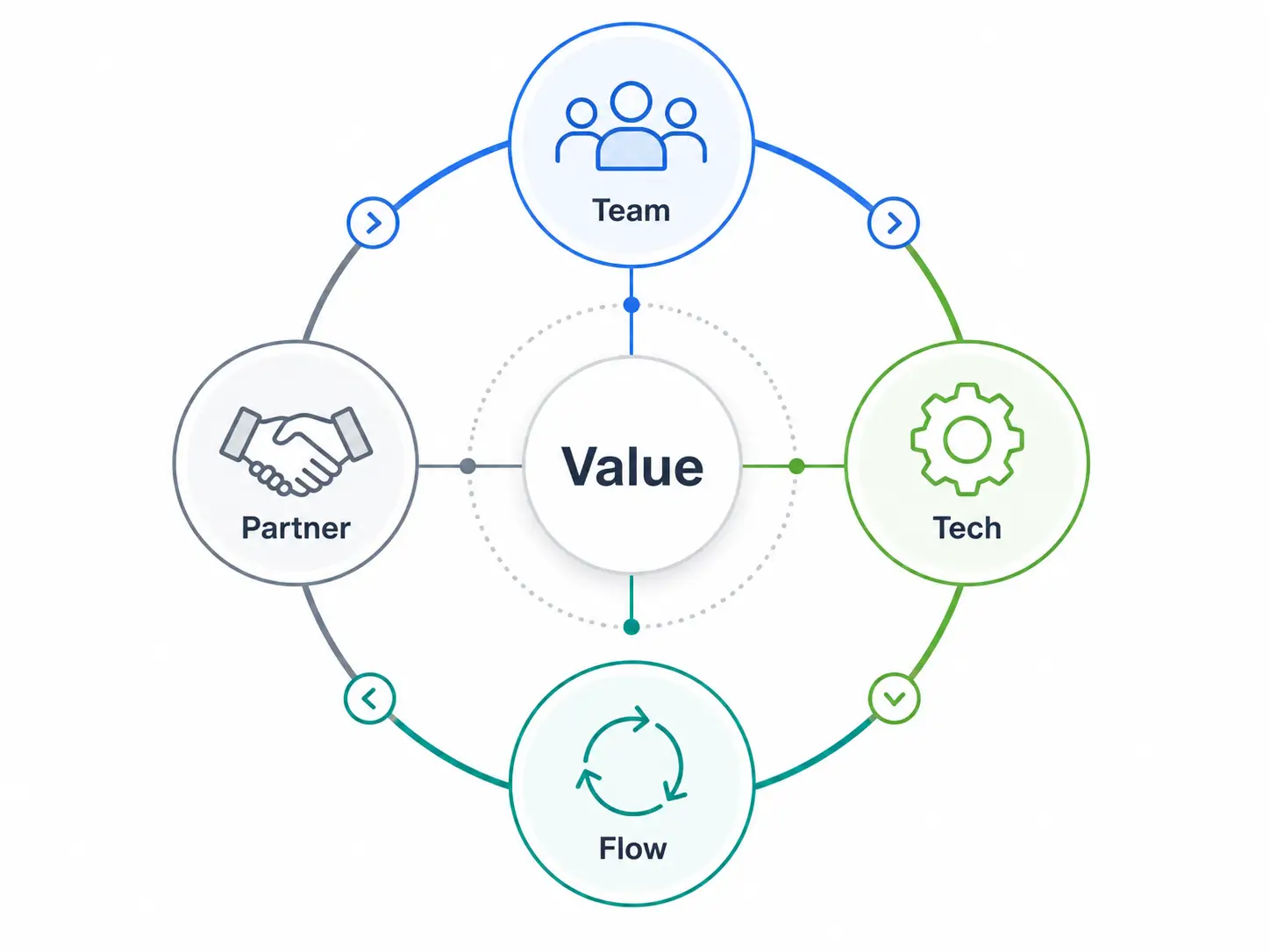
ITIL 4 is built around a few central concepts. You do not need to memorize them, but they help you understand the language.
ITIL 4 centers on co-creating value through services. The point of IT is not technology for its own sake, but the value it delivers to users.
ITIL 4 describes a service value system, which is how the parts of an organization work together to create value. It connects demand, activities, and outcomes.
ITIL 4 highlights four dimensions to balance: organizations and people, information and technology, partners and suppliers, and value streams and processes. Ignoring any one weakens the result.
ITIL 4 offers guiding principles, such as “start where you are” and “keep it simple.” They encourage practical, incremental improvement over big rewrites.
ITIL 4 defines many practices, but a few are used most. You will recognize them from ITSM.
Most teams start with these. They deliver the most value early.
ITIL is helpful, but it is not mandatory. Whether to adopt it depends on your size and goals.
Larger organizations often benefit from ITIL’s structure and shared language. Certification also helps staff speak a common vocabulary.
Smaller teams can apply ITIL ideas without formal adoption. Starting with clear processes, a service desk, and SLAs captures much of the value.
The guiding principle “start where you are” applies. Use what helps and grow into more as you mature.
A few misconceptions make teams avoid ITIL unnecessarily. It helps to clear them up.
One myth is that ITIL is only for big enterprises. In reality, small teams can apply its ideas without formal adoption.
Another is that ITIL is rigid bureaucracy. Used well, its own principle “keep it simple” argues against needless process.
A third is that you must adopt all of it. You can start with a few practices, like incident and request management, and grow from there.

Hengine SDP is a service management platform that supports common ITIL-aligned practices. Its ServiceHub engine handles incident and service request management through a full ticket lifecycle.
The SLA Management and Escalation Engine brings service-level discipline, while Workflow Automation and approvals support change enablement. A service desk model gives users a single point of contact.
You do not need to adopt ITIL formally to benefit. Hengine lets a team apply these practices practically and expand as it matures.
See also: Service Desk vs Help Desk.
Next step: Put ITIL-aligned practices to work without the complexity. Book a Hengine demo or start with the free Fremium plan.
ITIL originally stood for the Information Technology Infrastructure Library. Today it is used simply as “ITIL,” a framework of best practices for IT service management.
ITSM is the practice of managing IT services. ITIL is a framework of best practices for doing ITSM well. You can practice ITSM without ITIL, but ITIL provides a proven, widely used guide.
The latest version is ITIL v5, launched in February 2026. It runs in parallel with ITIL 4 and retains its core concepts, including co-creating value through services.
No. Certification helps individuals and larger teams share a common language, but you can apply ITIL principles without it. Start with clear processes, a service desk, and SLAs, then explore certification if it helps.