

Fixing the same issue over and over is a sign that something deeper is wrong. Problem management is the process that finds and removes those root causes, so incidents stop coming back.
This guide explains what problem management is, how it differs from incident management, and how the process works. It covers reactive and proactive approaches and the best practices that make it effective.
Problem management is the ITSM process for finding the root cause of incidents and removing it. A problem is the underlying reason that one or more incidents happen.
Where incident management restores service fast, problem management prevents the issue from recurring. It looks past the symptom to the cause.
The goal is fewer incidents over time. By fixing causes rather than symptoms, the team reduces both disruption and workload.
“The Complete Guide to IT Service Management (ITSM).”
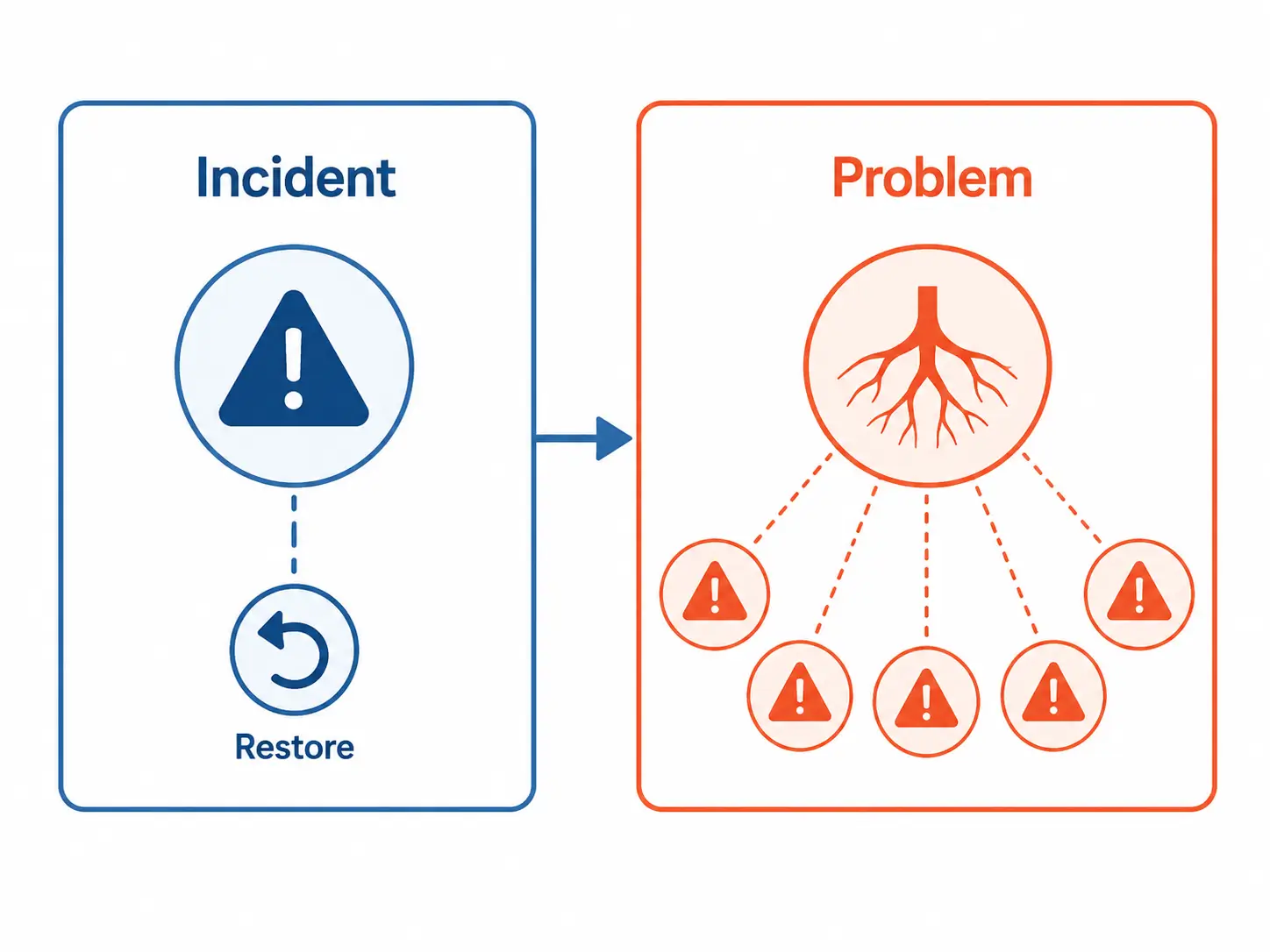
These two are closely linked but distinct. Knowing the difference is the heart of the topic.
An incident is a single disruption to a service, and the response is to restore service quickly. It deals with the symptom.
A problem is the cause behind one or more incidents, and the response is to fix it permanently. It deals with the root.
For example, repeated crashes are incidents, each restored by a restart. The faulty code causing them is the problem, fixed once so the crashes stop.
“Incident Management: A Complete Guide.”
Problem management works in two directions. Both are valuable.
Reactive problem management responds to incidents that have already happened. It investigates a pattern of incidents to find and fix their shared cause.
Proactive problem management looks ahead. It analyzes trends and weak points to fix causes before they trigger incidents at all.
Mature teams do both. They resolve the causes behind current incidents while hunting for risks that have not yet surfaced.
Problem management follows a clear path from detection to resolution. Each step moves toward the root cause.
Each step should be recorded. That record builds the knowledge that speeds future work.
Finding the root cause is the core of problem management. A few techniques help.
The “five whys” method asks why repeatedly until the true cause surfaces. Each answer digs one level deeper than the last.
Other approaches include timeline analysis and cause-and-effect diagrams. The aim is always the same: move past the symptom to the real source.
Two terms come up often in problem management. Both help manage issues before a full fix.
A known error is a problem with a documented root cause and a workaround. Recording it lets the team resolve related incidents quickly.
A workaround is a temporary way to restore service without fixing the cause. It keeps users working while the permanent fix is developed.
Together, these turn a painful recurring issue into a managed, predictable one.
A few habits make problem management pay off.

A few numbers show whether problem management is working. Track them over time.
The count of recurring incidents is the headline. As problems are resolved, repeat incidents should fall.
Also watch how many known errors have documented workarounds. A growing library means faster incident resolution.
Finally, track incidents prevented by proactive fixes. It is harder to measure, but it shows the real value of the work.
Hengine SDP gives teams the data and structure to find and fix root causes. Its ServiceHub engine records every incident with a full activity timeline, so patterns are easy to trace.
Vital Analytics surfaces ticket trends and recurring issues, which is where proactive problem management begins. A shared knowledge base captures known errors and workarounds for fast reuse.
When a permanent fix is ready, Workflow Automation and approvals help deploy it as a controlled change. The result is fewer repeat incidents and a lighter load on the team.
See also: Change Management in ITSM.
Next step: Spot recurring issues and fix root causes with Hengine’s analytics and knowledge base. Book a demo or start with the free Fremium plan.
Incident management restores service quickly after a disruption, dealing with the symptom. Problem management finds and fixes the root cause behind incidents, so they stop recurring. The two work together.
A known error is a problem whose root cause is understood and which has a documented workaround. Recording it lets the team resolve related incidents fast, even before the permanent fix is deployed.
A workaround is a temporary way to restore service without fixing the underlying cause. It keeps users working while a permanent fix is developed, and it is often documented as part of a known error.
Reactive problem management investigates incidents that have already happened to find their shared cause. Proactive problem management analyzes trends to fix causes before they trigger incidents. Mature teams do both.