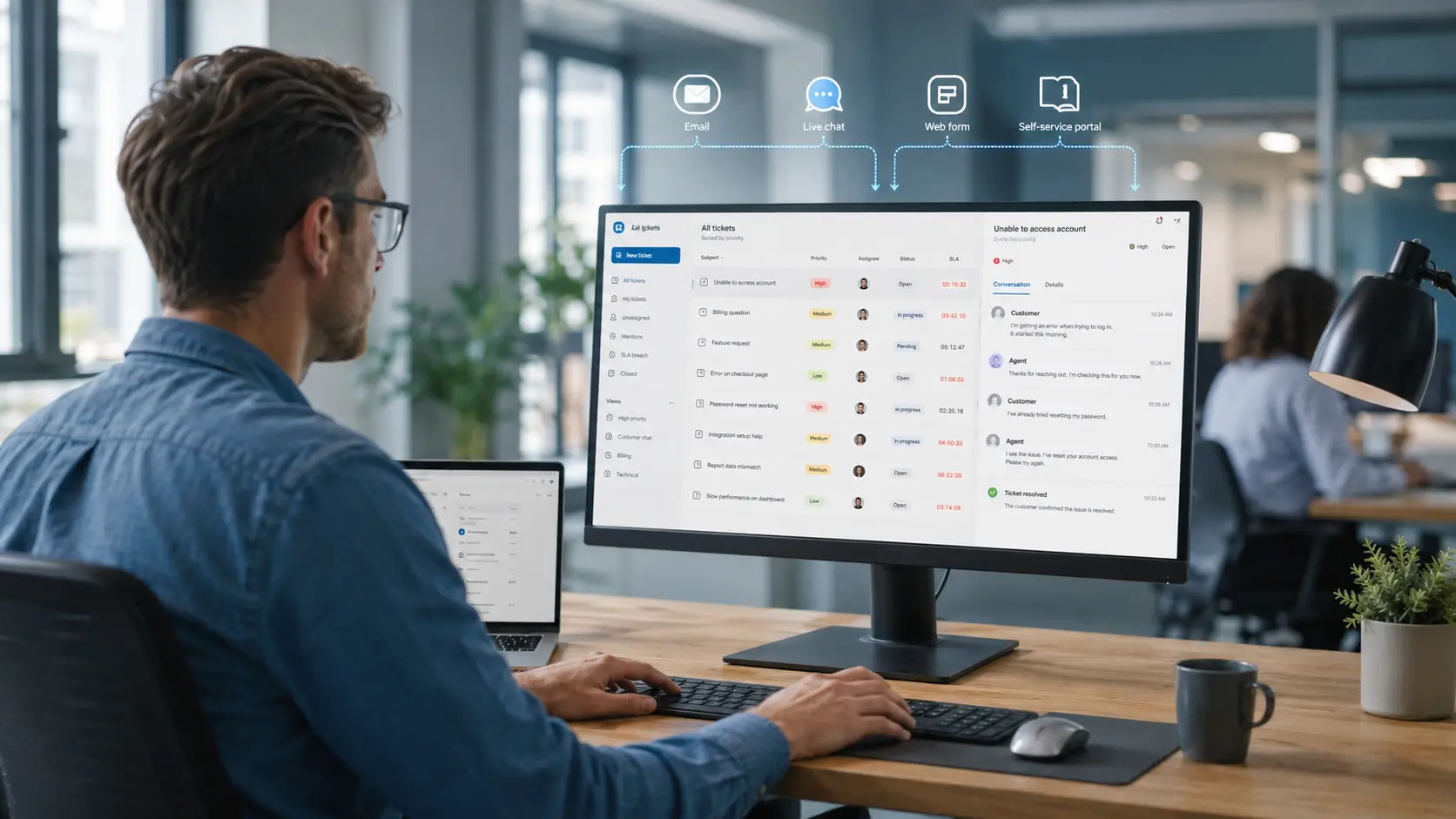

Setting SLA targets is a balancing act. Too loose, and customers wait too long; too tight, and your team breaches constantly. The right targets are realistic, data-driven, and matched to the work.
This SLA guide shows how to set response and resolution targets by priority and by department. It includes worked examples you can adapt to your own team.
A good SLA target is one your team can actually hit, most of the time, without heroics. It reflects real capacity, not wishful thinking.
It is also specific. A vague promise to “respond quickly” cannot be measured, while “respond within one hour” can.
Finally, a good target serves the customer. It is fast enough to keep trust, while staying achievable for the team.
You cannot set a sensible target without knowing your current performance. The baseline comes first.
Review your response and resolution times over a recent period, such as the last 90 days. This shows what your team already achieves.
A simple method: take your recent median resolution time, then set the target slightly tighter to push improvement without guaranteeing breaches.
Use the median, not the average, because a few extreme tickets can distort the average. The median reflects the typical case.

Most SLAs set two separate targets, and they serve different purposes.
The response target measures how quickly an agent first replies. A fast first response reassures the customer that the request is being handled.
The resolution target measures how long until the issue is fully fixed. It reflects the outcome the customer actually wants.
Setting both matters. A fast first reply means little if the resolution then drags on for days.

Not every ticket deserves the same deadline. Priority levels let urgent issues get faster targets.
The table below shows an example priority matrix. Adapt the numbers to your own baseline and capacity.
The timings below are illustrative examples, not benchmarks. Set your own from historical data.
| Priority | Example response target | Example resolution target |
|---|---|---|
| P1 – Critical | 15 minutes | 4 hours |
| P2 – High | 1 hour | 8 hours |
| P3 – Medium | 4 hours | 2 business days |
| P4 – Low | 1 business day | 5 business days |
P1 – Critical
P2 – High
P3 – Medium
P4 – Low
The pattern is consistent: the higher the impact, the tighter the deadline. Define clearly what makes a ticket a priority, so classification is consistent.

Different teams handle different work, so one set of targets rarely fits all. Department-level targets reflect that reality.
An IT outage and an HR onboarding request do not move at the same pace. IT may need a 15-minute response for outages, while HR works to a one-day target for routine queries.
The table below shows how targets can vary by department.
| Department | Typical request | Example resolution target |
|---|---|---|
| IT | System or access issue | Same day for high priority |
| HR | Onboarding or benefits | 2 business days |
| Facilities | Repair or workspace | 3 business days |
| Finance | Reimbursement or invoice | 5 business days |
IT
HR
Facilities
Finance
Set targets per department, then refine them with each team based on their real capacity.
A few errors undermine even well-intentioned SLAs. Avoid them from the start.
The biggest is setting aspirational targets with no data behind them. They look ambitious but guarantee breaches.
Another is ignoring business hours. A four-hour target means little if your team works eight-hour days and the clock runs overnight.
A third is never revisiting targets. As the team improves or grows, stale targets stop reflecting reality.
Targets are not set once and forgotten. They improve with regular review.
Check compliance against each target on a regular cadence. If a target is met easily every time, you may be able to tighten it.
If a target breaches often, find out why before loosening it. The cause may be staffing or routing, not the number itself.
Hengine SDP lets you define response and resolution targets and configure them by priority and department. Business hours, ticket categories, and templates all feed into how each SLA behaves.
Real-time tracking then shows performance against those targets, and Vital Analytics reveals which targets are realistic. This makes it easy to set, measure, and refine SLAs as the team evolves.
See also: SLA Management and 7 Ways to Prevent SLA Breaches.
Next step: Set realistic SLA targets your team can hit. Start with Hengine’s free Freemium plan or book a demo to configure targets by priority and department.
Start from your baseline performance over a recent period, using the median. Set targets slightly tighter to push improvement, but keep them achievable so you do not constantly breach them.
Yes. Higher-priority tickets should have faster response and resolution targets, since they carry more business impact. Lower-priority tickets can have longer, more relaxed deadlines.
Absolutely. IT, HR, facilities, and finance handle different work at different speeds, so their targets should reflect that. Set targets per department and refine with each team.
Review compliance regularly, such as monthly. Tighten targets you meet easily and investigate those you breach often before adjusting, since the cause may be the process rather than the number.
SLA Management pillar and across to “Setting SLA Escalation Rules That Work.”