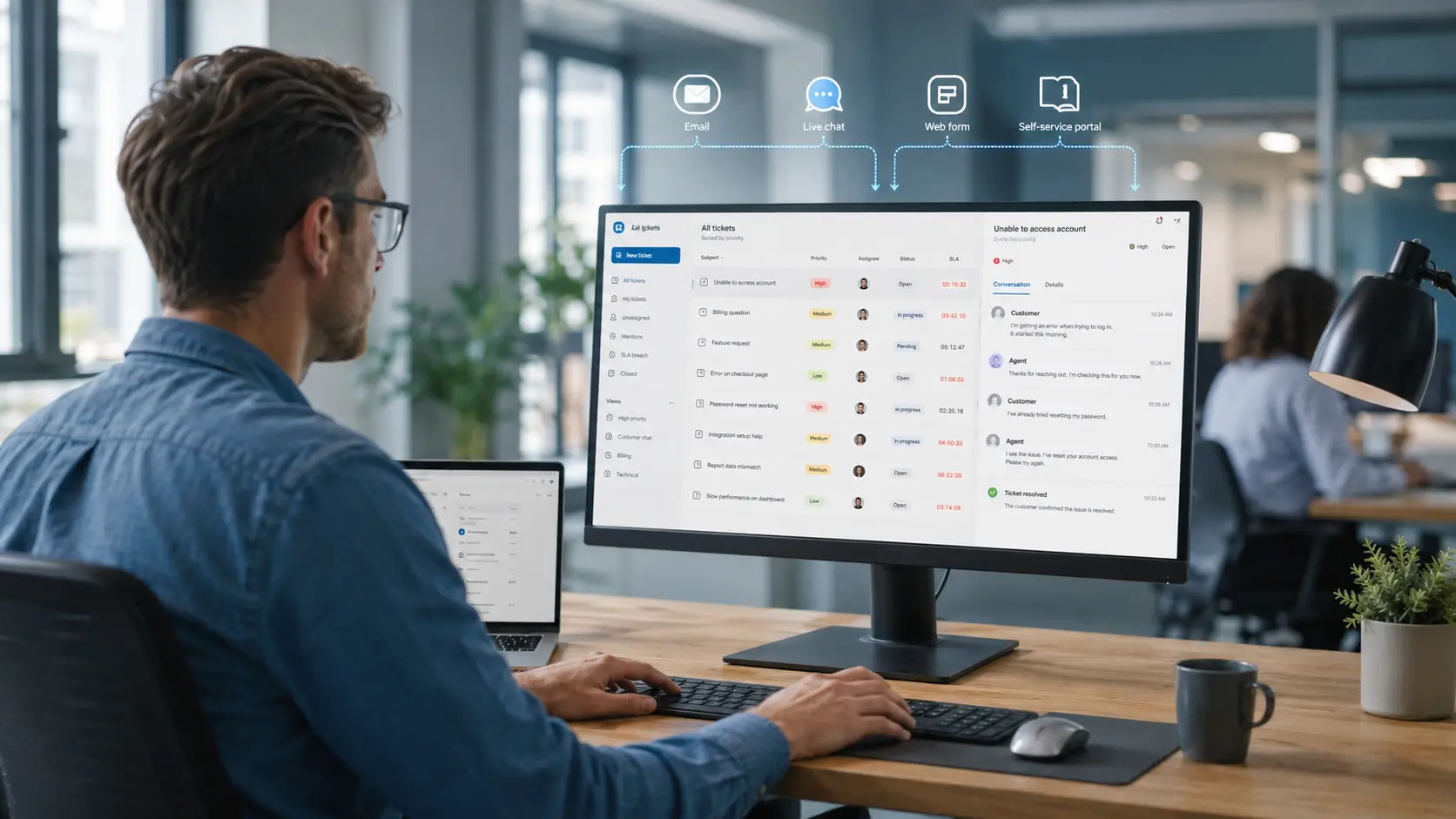

An SLA breach is a missed service deadline, and most are preventable. The difference between teams that breach often and those that rarely do comes down to a few habits.
This guide covers seven practical ways to stop breaches before they happen. Each one is something you can put in place this quarter.
A breach occurs when a ticket misses its agreed response or resolution deadline. For example, a P1 issue with a four-hour target that closes after five hours has breached.
Breaches matter for more than pride. They erode customer trust and, in contractual settings, can trigger penalties or service credits.
The good news is that breaches are usually the result of fixable process gaps, not bad luck. The seven steps below close those gaps.
The most common cause of breaches is targets that were never achievable. Aspirational deadlines guarantee failure.
Base each target on your real history. Review response and resolution times over a recent period, then set goals that improve on the baseline without breaking it.
Realistic targets are not a lower bar. They are a promise you can actually keep, which is what builds trust.
You cannot prevent a breach you do not see coming. Real-time tracking puts a live timer on every open ticket.
With live status, at-risk tickets stand out before the deadline. The team acts on a warning instead of discovering the miss afterward.
This single shift, from after-the-fact reporting to live monitoring, prevents a large share of breaches.

A timer helps only if someone is watching it. Automated alerts do the watching for you.
Set a warning when a ticket reaches a portion of its time budget, such as 75 percent. That early signal leaves room to act.
Pre-breach alerts turn SLA management from reactive to proactive. The team intervenes while there is still time.

Delays often come from tickets sitting in the wrong place. Automatic routing sends each ticket to the right owner instantly.
Escalation rules add a safety net. If a ticket nears its deadline, the system can notify a lead or reassign it automatically.
Together, routing and escalation keep tickets moving without anyone manually shepherding them.

A ticket with no clear owner is a ticket at risk. When everyone assumes someone else has it, deadlines slip.
Make ownership explicit at assignment. Each ticket should have one responsible person, not a vague shared pile.
Clear ownership also speeds escalation, because there is always a known point of contact.
Not every ticket deserves the same urgency. Treating them equally means critical issues wait behind routine ones.
Use priority levels, such as P1 to P4, tied to business impact. Urgent, high-impact issues get the tightest deadlines and the fastest routing.
Clear priorities help agents make the right call instantly when several tickets compete for attention.
Prevention improves when you learn from past breaches. Reporting shows where they happen and why.
Review compliance regularly. If one queue or category breaches often, that is where to adjust targets, staffing, or automation.
This feedback loop turns each breach into a lesson, so the same gap does not cause the next one.
Even strong teams breach occasionally. How you respond matters.
Acknowledge it quickly and communicate with the customer. A prompt, honest update softens the impact of a missed deadline.
Then trace the cause. Was the target unrealistic, the routing slow, or the alert missed? Fixing the root cause prevents a repeat.
Breach prevention is not just about hitting a number. It protects the relationships and revenue behind every ticket.
Each prevented breach is a customer who stayed informed and served on time. Over months, that consistency is what builds trust and loyalty.
There is a financial angle too. In contractual settings, breaches can trigger penalties or service credits, so prevention protects the bottom line.
Prevention also steadies the team. Constant last-minute firefighting burns agents out, while a proactive system keeps the day calm and predictable.
Hengine SDP is built for proactive SLA management. Its SLA Management and Escalation Engine tracks every ticket in real time and escalates automatically when one is about to breach.
It supports targets by priority and department, plus pause and resume for on-hold cases. Vital Analytics adds SLA risk prediction, flagging tickets likely to miss before the deadline arrives.
See also: The Complete Guide to SLA Management and Setting SLA Escalation Rules That Work.Catch SLA Risks Early feature section.
Next step: Stop breaches before they happen. Start with Hengine’s free Freemium plan or book a demo to see real-time SLA alerts on your own queue.
The most common cause is unrealistic targets set without historical data. Other frequent causes are slow routing, missing alerts, and unclear ownership. All four are fixable with process changes.
They warn the team before a deadline passes, usually when a ticket reaches a set portion of its time budget. That early signal gives agents time to act while the ticket can still be saved.
No. Targets should scale with priority, so critical issues get tighter deadlines than routine ones. Treating every ticket the same makes urgent work wait behind low-impact requests.
Tell the customer promptly with an honest update, then find the root cause. Fixing what allowed the breach, whether a target, a routing gap, or a missed alert, prevents a repeat.
SLA Management pillar and across to “How to Track SLAs in Real Time.”