

ServiceNow is the enterprise standard for IT service management. It runs complex workflows across huge organizations.
That power comes at a price. High cost and long, complex rollouts push many teams to look for lighter options.
This guide explains why teams seek a ServiceNow alternative, what to compare, and the best options in 2026. It stays balanced and notes where ServiceNow is still the right fit.
ServiceNow is powerful for good reason. Large enterprises rely on it daily.
It handles deep ITSM, ITOM, and custom workflows on one platform. Its ecosystem and integrations are vast.
If you are a large enterprise with complex processes and a dedicated admin team, ServiceNow is hard to beat.
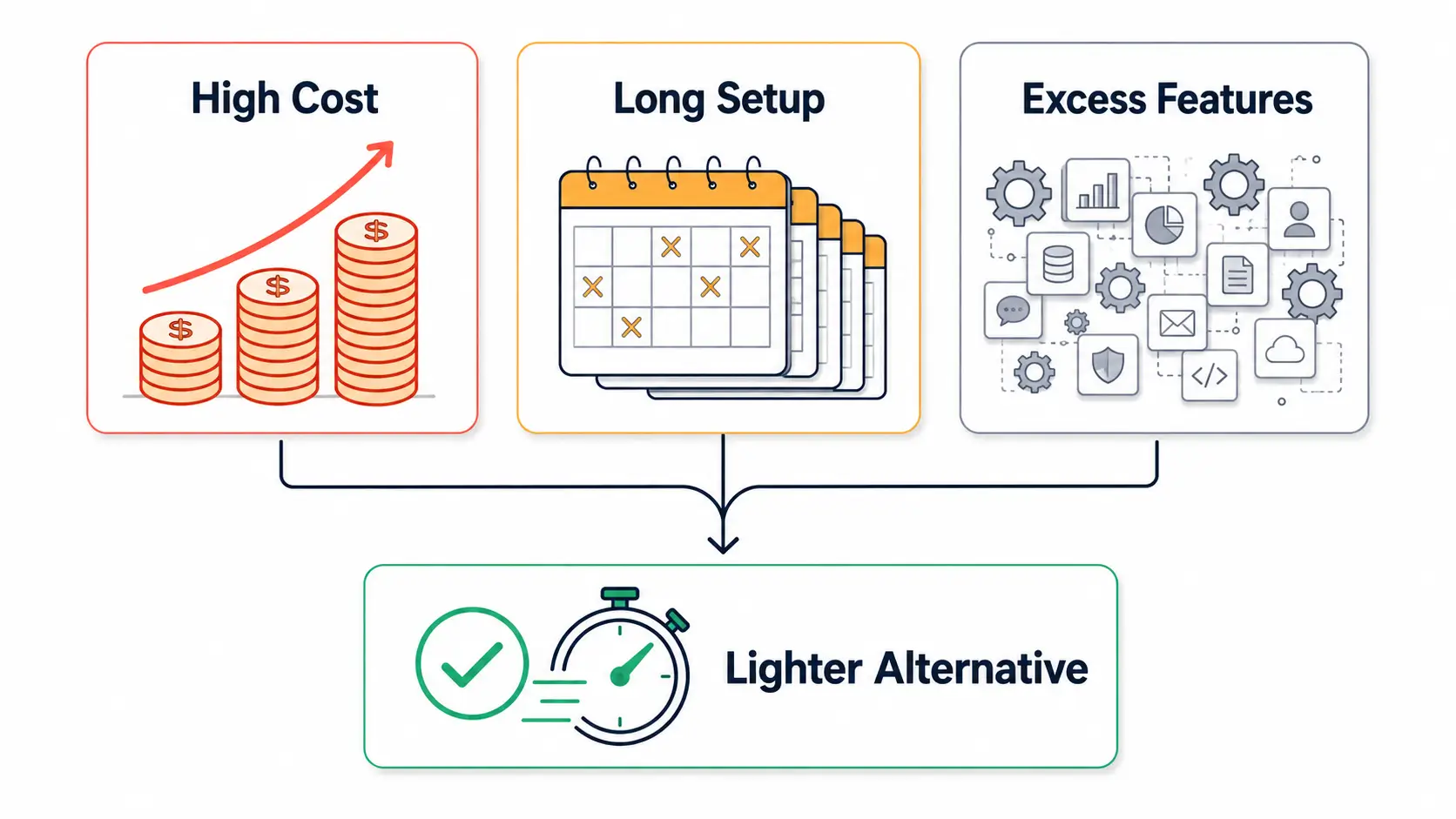
These are the most common reasons teams move away.
ServiceNow does not publish per-user prices. Estimates run from roughly $90 to $150 or more per user per month.
Total cost of ownership can reach several times the license fee once implementation and services are included.
Rollouts often take months and need consultants. Mid-market teams with lean staff struggle with that overhead.
Simple changes can require specialist help, which slows everyday improvement.
Many teams use a fraction of ServiceNow’s features. Paying enterprise prices for unused capability is common.
Lighter tools now cover core ITSM without the weight.
Compare each option against the same needs.
Each tool suits a different team. Confirm current pricing with each vendor, since ITSM pricing often needs a quote.
| Tool | Best for | Pricing model |
|---|---|---|
| Hengine | Mid-market teams wanting lighter ITSM | Simple, transparent pricing |
| Freshservice | User-friendly ITSM | Contact vendor |
| Jira Service Management | Teams already using Atlassian | Per-agent, published tiers |
| Zoho Desk | Budget service teams | Standard $14; Professional $23 |
| SolarWinds Service Desk | IT asset-focused teams | Contact vendor |
Hengine
Freshservice
Jira Service Management
Zoho Desk
SolarWinds Service Desk
Hengine is an AI ticketing and help desk platform with service management built in. It handles routing, SLAs, and reporting in the core product.
Strengths: fast setup, predictable pricing, and one workspace for IT, HR, and facilities requests.
It suits mid-market teams that want structured ITSM without a heavy rollout. ITSM guide
Trade-off: it is not built for the largest enterprises with highly custom, cross-module processes.
Best for: growing teams that want core ITSM without enterprise overhead.
Freshservice is a user-friendly ITSM tool. Many teams go live in days rather than weeks.
Strengths: clean interface, solid automation, and lower training needs than ServiceNow.
Trade-off: very large enterprises may find it less deep than ServiceNow.
Best for: IT teams wanting approachable, structured ITSM.
Jira Service Management fits teams already in the Atlassian ecosystem. It links support with development work.
Strengths: strong dev-to-IT workflows and published per-agent pricing.
Trade-off: it works best when you already use Jira and Confluence.
Best for: software-centric organizations.
Zoho Desk covers service needs at a low price, with Zia AI included on paid plans.
Trade-off: it is more help desk than full ITSM, and fits the Zoho ecosystem best.
Best for: budget service teams with lighter ITSM needs.
SolarWinds Service Desk focuses on IT asset and service management. It suits asset-heavy IT teams.
Trade-off: it is IT-specific and less suited to broad customer support.
Best for: IT teams that prioritize asset tracking.
The license is only part of the ServiceNow bill. Implementation, consultants, training, and ongoing admin all add cost.
Industry estimates put total cost at several times the annual license in the first year. Lighter tools reduce that overhead.
When you compare options, add setup and admin time to the price. A cheaper license with a fast rollout often wins.
Some organizations should keep ServiceNow. It fits large enterprises with complex, cross-department processes.
If you use many modules, run custom workflows, and have a dedicated platform team, the depth pays off. Switch only when the weight outgrows the value.
Use this summary to shortlist two tools to trial.
| Need | ServiceNow | Best alternative |
|---|---|---|
| Fast, low-overhead setup | Long, complex | Freshservice or Hengine |
| Predictable pricing | Custom, high | Hengine or Zoho Desk |
| Deepest enterprise ITSM | Excellent | ServiceNow |
| Dev and IT in one place | Add-on | Jira Service Management |
Fast, low-overhead setup
Predictable pricing
Deepest enterprise ITSM
Dev and IT in one place

Migration from ServiceNow needs planning. Map the workflows and data you truly use first.
Export incidents, assets, and knowledge articles. Rebuild only the workflows that add value, not every legacy process.
A phased move, one service area at a time, reduces risk.
See also: Help Desk Software Alternatives.
Freshservice and Hengine are popular for teams that want core ITSM without a long, costly rollout.
Many cost far less, with predictable per-agent pricing instead of custom enterprise quotes. Total cost of ownership is usually lower too.
Yes. Tools like Freshservice, Jira Service Management, and Hengine support core ITSM workflows.
Often, yes. Many mid-market teams use a fraction of its features and pay for capability they never touch.
A phased move can take weeks per service area. Lighter tools go live faster than a full ServiceNow rollout.
Match the tool to how much ITSM depth you truly need. Trial two options with your real incident and request flows.
To see structured ITSM without enterprise overhead, explore how Hengine handles service requests and SLAs.
Disclaimer: Pricing and features are accurate as of September 2026 and may change. Check each vendor’s website for current details. Comparisons reflect our opinion and are provided for informational purposes only.